Stamp duty (SDLT) calculator
Calculate Stamp Duty Land Tax on a residential property in England or Northern Ireland. Scotland uses Land and Buildings Transaction Tax and Wales uses Land Transaction Tax — both have different bands, and neither is covered here.
Estimated stamp duty
£6,250
Effective rate
1.92%
Tax as a percentage of the purchase price
How stamp duty is actually calculated
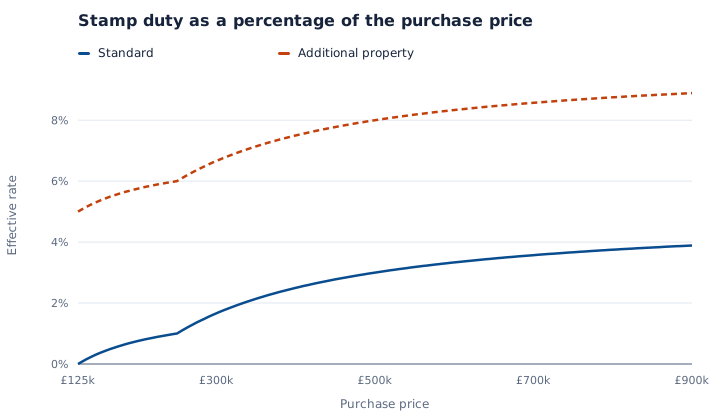
SDLT is a progressive, banded tax, not a flat percentage. It works exactly like income tax: the price is sliced into bands, and each band's rate applies only to the money inside that band. Nobody pays 5% on their whole purchase price.
This matters because of a myth that will not die — that crossing a threshold by £1 lands you with a huge tax bill. That was true before December 2014, when SDLT was a slab tax. It has not been true since.
| Portion of the price | Home mover | Additional property |
|---|---|---|
| Up to £125,000 | 0% | 5% |
| £125,001 to £250,000 | 2% | 7% |
| £250,001 to £925,000 | 5% | 10% |
| £925,001 to £1.5m | 10% | 15% |
| Over £1.5m | 12% | 17% |
First-time buyers use a separate set of bands, but only while the purchase price stays at or below £500,000:
| Portion of the price | First-time buyer rate |
|---|---|
| Up to £300,000 | 0% |
| £300,001 to £500,000 | 5% |
| Above £500,000 | Relief withdrawn — home-mover rates apply to the whole price |
Last checked August 2026. These bands reflect the SDLT rates that took effect on 1 April 2025, and the additional-dwellings surcharge of 5 percentage points that took effect on 31 October 2024. Thresholds are set by government and change at Budgets, so check the current rates on GOV.UK before you exchange contracts.
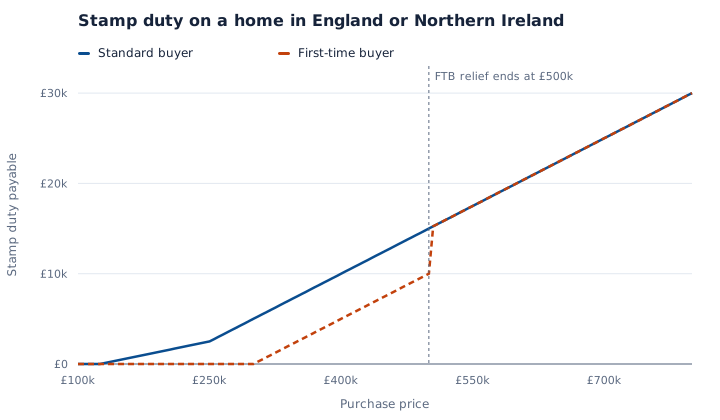
That withdrawal is the one genuine cliff edge left in the system, and the only place where a pound really does matter.
A worked example, step by step
Worked example
A home mover buying at £325,000
- First £125,000 at 0% = £0.
- Next £125,000 (the slice from £125,000 to £250,000) at 2% = £2,500.
- Remaining £75,000 (from £250,000 to £325,000) at 5% = £3,750.
- Add the slices: £0 + £2,500 + £3,750 = £6,250.
Stamp duty due: £6,250 (an effective rate of 1.92%)
A first-time buyer at the same price pays £1,250 — nothing to £300,000, then 5% on the final £25,000. Someone buying it as a second home or buy-to-let pays £22,500: the £6,250 standard charge plus a 5% surcharge on the full £325,000.
The £500,000 first-time buyer cliff edge
| Purchase price | First-time buyer pays | Home mover pays |
|---|---|---|
| £450,000 | £7,500 | £12,500 |
| £500,000 | £10,000 | £15,000 |
| £500,001 | £15,000 | £15,000 |
Agreeing £500,000 rather than £502,000 saves a first-time buyer £5,000 in tax. If you are a first-time buyer negotiating near that number, it is worth naming it explicitly.
What this calculator does not cover
SDLT has a long tail of special cases. The calculator handles the three common residential situations; these are the ones it deliberately leaves out.
- Scotland and Wales. LBTT and LTT are separate devolved taxes with their own thresholds and their own first-time buyer treatment. Use the Revenue Scotland or Welsh Revenue Authority calculators instead.
- The non-UK resident surcharge. Buyers who are not UK resident for SDLT purposes pay an extra 2 percentage points on top of whichever rates otherwise apply.
- Replacement-of-main-residence refunds. If you complete on a new home before selling the old one, you pay the higher rates and reclaim them when the previous home sells, within a three-year window.
- Purchases under £40,000, mixed-use and multiple dwellings. The additional-property surcharge does not apply at all below £40,000. Mixed-use property and portfolio purchases can attract non-residential rates or different relief, which changes the answer completely.
- Shared ownership and companies. Shared ownership buyers choose between a market-value election and paying in stages. Companies buying residential property face their own rules.
How stamp duty affects your mortgage plans
Stamp duty cannot be added to a standard residential mortgage. It comes out of your cash, alongside legal fees, searches, the survey and removals. That makes it a direct reduction in the deposit you can put down, which in turn raises your loan-to-value and can push you into a more expensive rate band.
The practical sequence is worth getting right: work out the tax first, subtract it and your other costs from your savings, and only then decide what deposit you can genuinely put down. Doing it the other way round is how people end up at 90.4% LTV when they had planned on 90%.
When it is worth speaking to a broker or conveyancer
For a straightforward purchase, your conveyancer will calculate and file the SDLT return and you will not need more than that. Get proper advice if you are buying an additional property while a sale is pending, buying with someone who has owned before, buying through a limited company, purchasing a property with an annexe or with land, buying mixed-use premises, or if you are not UK resident for tax purposes. In those situations the difference between the right and wrong analysis is routinely five figures.
A broker's role here is joining the tax to the funding: making sure the cash you set aside for SDLT has not quietly broken the deposit assumption your mortgage offer was based on.
Frequently asked questions
- How much is stamp duty on a £325,000 house?
- A home mover buying a £325,000 property in England or Northern Ireland pays £6,250 in stamp duty: nothing on the first £125,000, 2% on the slice from £125,000 to £250,000 (£2,500), and 5% on the remaining £75,000 (£3,750). A first-time buyer would pay £1,250 on the same property.
- Does this calculator work for Scotland and Wales?
- No. Stamp Duty Land Tax applies only in England and Northern Ireland. Scotland charges Land and Buildings Transaction Tax (LBTT) and Wales charges Land Transaction Tax (LTT). Both use different thresholds, different band rates and different first-time buyer rules, so this calculator will give the wrong answer for a Scottish or Welsh property.
- Is stamp duty charged on the whole price or in slices?
- In slices. SDLT is progressive, like income tax: each band's rate applies only to the portion of the price falling inside that band. Buying at £250,001 rather than £250,000 costs 5p more in tax, not thousands. The one genuine cliff edge is first-time buyer relief, which disappears entirely above £500,000.
- Who counts as a first-time buyer for stamp duty relief?
- You must never have owned a freehold or leasehold interest in a dwelling anywhere in the world, including inherited or jointly owned property. If you are buying with someone else, every buyer must qualify. The property must be your only or main residence, and relief is unavailable if the price exceeds £500,000.
- Do I pay the surcharge if I am replacing my main home?
- Not if you sell your previous main residence on or before completion. If the sale has not happened yet you must pay the higher rates upfront, then claim a refund from HMRC once the old home sells, provided that happens within three years. Time limits are strict, so ask your conveyancer to diarise the deadline.
- When does stamp duty have to be paid?
- The SDLT return must be filed and the tax paid within 14 days of completion. In practice your conveyancer handles both and collects the money from you before completion, so you need the cash available as part of your deposit and fees, not as part of your mortgage.
Keep going
These are the tools and guides people most often need next.
- The full stamp duty guide — reliefs, surcharges and the devolved equivalents in more detail.
- First-time buyer mortgage guide — how relief fits into the wider cost of buying.
- Buy-to-let mortgage guide — budgeting the surcharge into a rental purchase.
Guide only. This calculator gives an illustrative estimate and is not regulated mortgage advice or a personal recommendation. Actual figures depend on the lender, product, term, credit profile and your circumstances. Only an FCA-authorised adviser can recommend a product for you. Your home may be repossessed if you do not keep up repayments on your mortgage.
A guide only, covering residential SDLT in England and Northern Ireland. Rates change, and there are reliefs, surcharges and exceptions — including the surcharge for non-UK residents, multiple dwellings, mixed-use property and companies — that this tool does not model. Rates and thresholds change at fiscal events — confirm the current position on GOV.UK, and confirm the exact figure with your conveyancer before you commit.
Want a real quote?
Browse independent brokers and advisers who specialise in your situation.
Find a mortgage broker