Mortgage overpayment calculator
Overpaying reduces the balance that interest is charged on, so every extra pound keeps working for the whole of the remaining term. See what a regular monthly overpayment would do to your interest bill and your finish date.
Interest saved
£37,238
Years saved
5.7 yrs
How much sooner you would be mortgage-free
New term
19.3 yrs
With the extra payments
New total monthly payment
£1,423
Normal payment of £1,223 plus your overpayment
How the overpayment calculation works
There is no single formula for this one, because an overpayment changes the shape of every month that follows it. The calculator runs the mortgage forward month by month:
- Work out the normal monthly payment for your balance, rate and remaining term using the standard annuity formula.
- Add your overpayment to that figure to get the total you actually pay each month.
- For each month, charge one month's interest on the current balance, then take the whole payment off. Whatever is left over after the interest reduces the debt.
- Repeat until the balance reaches zero, and count the months it took.
- Compare the total interest paid on that path with the interest you would have paid on the original schedule. The difference is your saving.
The reason the saving is so large relative to the money involved is compounding running in your favour. A £200 overpayment today does not just save you the interest on £200 for one month — it removes £200 from the balance for every remaining month of the mortgage, and it also brings the finish line forward, cutting off the tail of the loan entirely.
A worked example, step by step
Worked example
£220,000 at 4.5% with 25 years left, overpaying £200 a month
- The normal monthly payment is £1,222.83. Over 300 months that is about £146,849 in interest.
- Add the overpayment: you now pay £1,422.83 a month.
- Month one interest is £220,000 × 4.5% ÷ 12 = £825.00, so £597.83 comes off the balance instead of £397.83.
- Keep going and the balance reaches zero after 232 months — 19 years and 4 months — rather than 300.
- Total interest on the new path is about £109,612.
Interest saved: about £37,238
Mortgage cleared early by: 5 years and 8 months
You paid in an extra £46,400 of your own money across those 232 months and it bought you £37,238 of avoided interest plus 68 months with no mortgage payment at all — worth a further £83,000 or so of payments you never have to make.
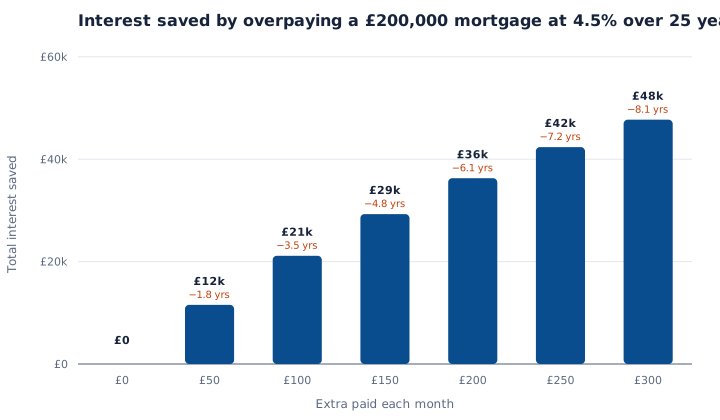
What different overpayments do
| Monthly overpayment | New term | Years saved | Interest saved |
|---|---|---|---|
| £0 | 25.0 yrs | 0.0 | £0 |
| £50 | 23.3 yrs | 1.7 | £11,631 |
| £100 | 21.8 yrs | 3.2 | £21,467 |
| £200 | 19.3 yrs | 5.7 | £37,238 |
| £300 | 17.4 yrs | 7.6 | £49,364 |
| £500 | 14.6 yrs | 10.4 | £66,864 |
The returns taper: the first £100 a month saves £21,467, the second £100 adds only £15,771 on top. Overpaying is powerful, but the biggest single gain comes from starting at all.
What the result does and does not tell you
- It assumes one rate for the whole term. Your actual rate will change at each remortgage. Overpayments made now still reduce the balance you carry into the next deal, so the benefit is real — but the precise pounds will differ.
- It assumes the overpayment shortens the term, not the payment. Many lenders default to reducing your future monthly payment instead, which saves far less interest. You usually have to ask for term reduction explicitly.
- It does not check your early repayment charge. Exceed your annual allowance during a fixed period and the charge can easily wipe out a year of savings.
- It does not model your alternatives. Pension contributions with tax relief and employer matching, clearing credit card debt, or simply holding an emergency fund can all beat overpaying, depending on your circumstances.
- Money paid in is hard to get back. Unless you have an offset mortgage or your lender offers a borrow-back facility, an overpayment is not accessible savings. It is equity in a house.
What lenders do differently from this model
- Annual allowances, not monthly ones. A 10% allowance is normally measured across a mortgage year against the balance at the start of that year, so it does not reset in January and it shrinks as your balance falls.
- Daily, monthly or annual interest. With daily interest an overpayment starts working immediately. With annual interest calculation it may sit in a holding account until the next anniversary, which changes the timing of the benefit considerably.
- Recalculation timing. Some lenders adjust your payment or term immediately after an overpayment; others do it once a year at statement time. The maths ends up in the same place, but the statements will not match this calculator month by month.
- Minimum overpayment amounts. A few lenders set a minimum, or handle regular standing orders differently from ad-hoc lump sums.
- Offset alternatives. An offset mortgage achieves a similar interest saving while leaving the money accessible in a linked savings account — a genuinely different product rather than a variation on overpaying.
When it is worth speaking to a broker
Overpaying is one of the few mortgage decisions you can generally make without advice, provided you have checked your allowance and kept an emergency fund. It is worth a conversation if you are within a fixed period and want to overpay more than the allowance; if you are weighing overpaying against an offset mortgage; if you are due a large lump sum and want to know whether to use it now or at the next remortgage; or if reducing the balance would drop you into a lower loan-to-value band before your deal ends.
That last point is often overlooked and can be worth more than the interest saving itself. Overpaying just enough to move from 82% to 79% loan-to-value before you remortgage can unlock a materially cheaper rate on the entire balance.
Frequently asked questions
- How much does overpaying £200 a month save?
- On a £220,000 mortgage at 4.5% with 25 years left, overpaying £200 a month saves roughly £37,200 in interest and clears the mortgage about five years and eight months early. The saving comes from the fact that every pound overpaid stops earning the lender interest for the whole of the remaining term.
- How much can I overpay without a penalty?
- Most fixed-rate deals allow overpayments of up to 10% of the outstanding balance each year without an early repayment charge, though some allow more and a few allow none. The allowance usually resets on the anniversary of the mortgage, not on 1 January. Check your offer document or ask the lender before setting up a standing order.
- Should I overpay my mortgage or put money in savings?
- Compare your mortgage rate with the after-tax return on savings. If a savings account pays more than your mortgage rate once tax is taken into account, saving wins; if your mortgage rate is higher, overpaying wins. Before either, clear more expensive debt and keep three to six months of emergency cash accessible.
- Should I reduce my term or my monthly payment?
- Reducing the term keeps your payment the same and clears the debt sooner, saving the most interest. Reducing the payment lowers your monthly commitment but stretches the debt over the original term, saving much less. Reducing the term is usually better financially; reducing the payment is better if your budget is tight.
- Do overpayments reduce my interest straight away?
- If your lender calculates interest daily, yes — the balance drops the day the money lands and you are charged less from that point. Lenders that calculate interest monthly or annually may only recognise the overpayment at the next calculation date. Ask which method applies, because on annual-interest mortgages the timing matters.
- Is it better to overpay monthly or in a lump sum?
- Mathematically, earlier is better: money paid in January saves more interest than the same amount paid in December. Regular monthly overpayments also build the habit and spread the cost. Lump sums suit bonuses or inheritances, but check whether the lender treats a lump sum as a partial redemption with its own rules.
Keep going
These are the tools and guides people most often need next.
- Overpaying your mortgage — the practical guide, including how to ask for a term reduction.
- Early repayment charges explained — what the penalty actually costs and when it applies.
- Offset mortgages explained — the same interest saving, with the money still accessible.
Guide only. This calculator gives an illustrative estimate and is not regulated mortgage advice or a personal recommendation. Actual figures depend on the lender, product, term, credit profile and your circumstances. Only an FCA-authorised adviser can recommend a product for you. Your home may be repossessed if you do not keep up repayments on your mortgage.
A guide only. Most lenders allow overpayments of up to 10% of the outstanding balance each year without an early repayment charge, but allowances and penalties vary by product. Check your mortgage offer, and keep an accessible emergency fund before committing spare cash to your mortgage.
Want a real quote?
Browse independent brokers and advisers who specialise in your situation.
Find a mortgage broker