6 min read · Updated
When to remortgage, and how to do it
How to time a remortgage, how a product transfer differs from moving lender, the realistic timeline, the costs involved, and when staying put is the better call.
Written and reviewed by the MortgageMatch editorial team. How we research and review our guides.
Start looking about six months before your current fixed or tracker deal ends. Most lenders will let you reserve a new rate three to six months ahead, so you can lock something in and still switch if better terms appear before completion. The decision is really between a product transfer, which keeps you with your existing lender, and a full remortgage, which moves you to a new one. Doing nothing means falling onto your lender's standard variable rate, which is usually the most expensive outcome available to you.
Why the end date of your deal matters so much
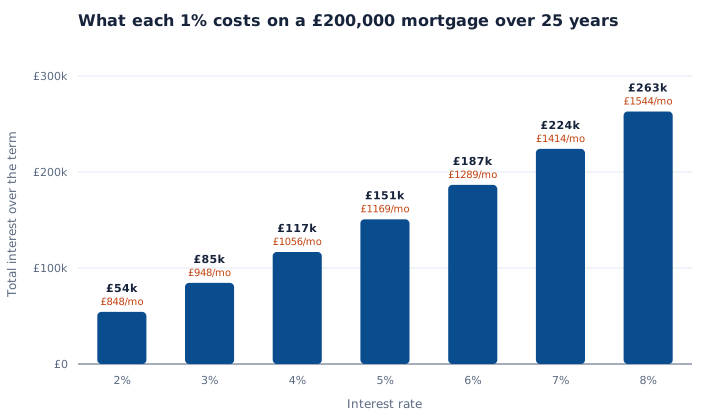
A fixed rate does not end your mortgage. It ends the discounted period. When it expires, the loan reverts to the lender's standard variable rate, or SVR. The SVR is set by the lender, can move at any time, and is typically well above the rates the same lender offers on new fixed products. Lenders do not switch you automatically to something cheaper. If you take no action, you simply pay more.
The gap can be substantial. On a 200,000 pound repayment balance over 20 years, the difference between two illustrative rates of 4.5 per cent and 7.5 per cent is roughly 350 pounds a month. That is not a forecast of any current rate. It is simply an illustration of why the reversion date deserves a diary entry.
Your lender should write to you before the deal ends. Do not wait for that letter to start work. By the time it arrives you may have only weeks left, and a full remortgage takes longer than that.
Product transfer or remortgage: the honest comparison
A product transfer means taking a new rate from your existing lender on the same loan. Because you are not borrowing from anyone new, it usually needs no fresh affordability assessment, no new valuation and no legal work. It is often executable online or over the phone in a day or two. There are normally no legal or valuation fees.
A remortgage moves the debt to a different lender. That is a full mortgage application. It means income verification, bank statements, a credit search, a valuation of the property and conveyancing to discharge the old charge and register the new one. It takes weeks, not days.
The trade-off is straightforward. Product transfers are fast, low friction and low risk of rejection. Remortgages open up the whole market and often produce a better rate, but they can fail if your circumstances have weakened since you last applied.
Product transfers tend to win when your income has fallen, you have become self-employed recently, you have picked up adverse credit, the property is hard to value or unusual, or the rate difference is small enough that the hassle is not worth it. Remortgages tend to win when your loan to value has improved, your income has risen, the balance is large enough that a small rate difference matters in pounds, or you also want to change the term or borrow more.
The step-by-step process and a realistic timeline
Around six months out, check your current deal's end date, your outstanding balance and any early repayment charge. Get a rough view of what your home is worth. Pull your credit files.
At five to six months out, compare your existing lender's product transfer options against what the wider market offers. A whole-of-market broker can do both sides of that comparison in one conversation.
At three to four months out, apply. If you are remortgaging, you submit a full application with payslips or accounts, bank statements and identification. The lender instructs a valuation, often a desktop or drive-by rather than a physical inspection. A mortgage offer typically follows within two to six weeks, though this varies a lot by lender and by how clean your case is.
After the offer, conveyancing runs. A remortgage conveyance is much lighter than a purchase, but it still involves title checks, redemption figures from your existing lender and Land Registry work. Four to six weeks is a reasonable expectation, and longer if there is anything unusual about the title, such as a shared ownership element, a leasehold with a slow freeholder, or a name to be added or removed.
You aim for completion on the first day after your current deal expires. That way you never touch the SVR.
What it actually costs
A remortgage can carry an arrangement or product fee, often between roughly 500 and 1,500 pounds, though many products are fee free at a slightly higher rate. There may be a valuation fee, though remortgage valuations are frequently free. Legal costs are often covered by a free legal package from the new lender, but the free package can be slower than instructing your own solicitor.
You may also pay a broker fee. Some brokers charge nothing to the client and are paid by the lender. Others charge a fee. Both models are legitimate. Ask which applies before you engage anyone, and ask what it buys you.
The cost that catches people out is the early repayment charge. If you leave a fixed deal early, you typically pay a percentage of the balance, often stepping down each year. On a 250,000 pound balance a 2 per cent charge is 5,000 pounds. That almost always outweighs a modest rate saving, which is why timing to the end of the deal matters.
Whether to add fees to the loan
Lenders usually let you add the product fee to the balance. It is convenient and it preserves your cash, but you then pay interest on that fee for the remaining term. On a 1,000 pound fee added to a 25 year mortgage, the total cost is considerably more than 1,000 pounds. On a large loan, a fee-paying product at a lower rate can still be cheaper overall than a fee-free one. On a small loan, the fee-free option usually wins. Compare the true cost over the fixed period, not the headline rate.
When staying put is the right answer
Sometimes the best remortgage is no remortgage. If your balance is small, say under 50,000 pounds, the fees can swallow the saving. If you are planning to move house within the next year or two, taking a new fixed rate with an early repayment charge could box you in, though most mortgages are portable. If your circumstances have deteriorated and a new lender might decline you, a product transfer protects you from being stranded on the SVR after a failed application.
A worked example. Suppose you owe 180,000 pounds with 18 years left. Your existing lender offers a product transfer at an illustrative 4.79 per cent with no fees. A new lender offers an illustrative 4.49 per cent with a 999 pound fee. Over a two year fix, the 0.3 percentage point saving is worth roughly 1,050 pounds in interest, against a 999 pound fee plus your time and the risk of the application failing. On those numbers it is close to a coin toss, and the product transfer is arguably the better use of a weekend. Change the balance to 400,000 pounds and the maths flips decisively toward moving.
Getting the decision checked
If you want someone to run both sides of that comparison properly, the MortgageMatch directory lists FCA-authorised brokers across the UK who can look at your existing lender's offer alongside the wider market.
Frequently asked questions
- How long before my fixed rate ends should I start looking at a remortgage?
- Around six months before the end date. Many lenders let you reserve a new rate three to six months in advance, and a full remortgage to a new lender commonly takes six to twelve weeks from application to completion once valuation and conveyancing are included. Starting early means you can lock a rate and still switch if something better appears before completion.
- Is a product transfer better than a remortgage?
- Neither is automatically better. A product transfer stays with your existing lender, usually needs no new affordability assessment, valuation or legal work, and can complete in days. A remortgage moves you to a new lender, requires a full application, and takes weeks, but it opens up the whole market and often gets a better rate. Compare both before deciding.
- What happens if I do nothing when my mortgage deal ends?
- Your mortgage reverts to the lender's standard variable rate. The SVR is set by the lender, can change at any time, and is normally much higher than the rates the same lender offers on new deals. It is usually the most expensive place your mortgage can sit, and lenders do not move you off it automatically.
- Will I pay an early repayment charge if I remortgage?
- You will if you leave a fixed or discounted deal before it ends. The charge is typically a percentage of the outstanding balance and often reduces each year. On a 250,000 pound balance a 2 per cent charge is 5,000 pounds, which usually outweighs any rate saving. Check your mortgage offer or ask your lender for the exact figure and expiry date.
- Does remortgaging affect my credit score?
- A remortgage application involves a hard credit search, which other lenders can see on your file. One search around a planned remortgage is normal and not damaging on its own. A product transfer with your existing lender usually does not involve a new hard search. Avoid making several unrelated credit applications in the months before you apply.
- Should I add the arrangement fee to my mortgage?
- You can with most lenders, but you then pay interest on that fee for the rest of the term, so a 999 pound fee costs considerably more than 999 pounds over 25 years. Paying it upfront is cheaper if you have the cash. Compare the total cost of each product over the fixed period rather than the headline rate.
This guide is general information about how UK mortgages work, not a personal recommendation. Only an FCA-authorised adviser can recommend a product for your circumstances. Tax and scheme rules change, so check the relevant government source before you budget.
Related guides
- Early repayment charges: how to avoid ERCs on your mortgageHow early repayment charges are calculated and tapered, what triggers them, how the annual overpayment allowance works, and when paying an ERC to switch deals is still the cheaper option.
- Should you overpay your mortgage?What mortgage overpayments actually save, how to choose between cutting the term and cutting the payment, and how overpaying compares with saving, pension contributions and clearing other debt.
- Porting a mortgage: keeping your rate when you moveHow porting works when you move house, why you have to requalify, how sub-accounts and blended rates work if you borrow more, what happens if your sale and purchase do not line up, and when remortgaging beats porting.